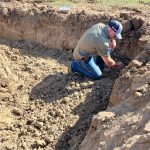
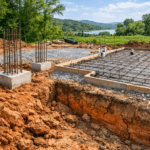
Construction in and around Hudson starts with more than plans, materials, and equipment. The ground beneath a home, commercial building, roadway, or other improvement can influence how that project should be designed and built. In northern Colorado, changing soil conditions and moisture-sensitive materials make understanding the site especially valuable before major construction decisions are finalized. Quick answer: Geotechnical engineering supports successful construction projects by evaluating subsurface soil, rock, groundwater, and related site conditions before and during design. The findings help engineers and project teams make informed decisions about foundations, earthwork, drainage, pavement, and other improvements. For projects in Hudson and... View Article
Hudson, Colorado, located in Weld County, is part of Northern Colorado’s rapidly growing Front Range region. While the town offers sweeping plains and a peaceful lifestyle, it presents a unique challenge for residential and commercial construction: expansive clay soils. These soils, rich in montmorillonite minerals, have a high capacity to absorb water and expand, then shrink dramatically during dry spells. This shrink-swell behavior creates unpredictable movements in the ground, often leading to structural issues in improperly designed foundations. For property owners and developers in Hudson, CO, understanding and addressing these soil conditions is not optional. It is an essential part... View Article
The California Bearing Ratio (CBR) test is a vital procedure in geotechnical engineering, widely used to assess the strength and stability of soil subgrades and base materials for road construction and pavement design. Whether you’re a civil engineer, contractor, or someone with an interest in construction, understanding what is California Bearing Ratio test and how to perform CBR test is essential for creating durable and efficient road systems. This blog delves deep into the principles, methodology, and significance of CBR testing. What is the California Bearing Ratio Test? The California Bearing Ratio (CBR) test is a penetration test that evaluates... View Article
A water table refers to the pores and fractures within the ground that can become saturated with water. This area is also sometimes called the zone of saturation. A simple explanation would be the depth below where the ground is saturated. Understanding water tables, the different types of water tables, and how they behave is important for many different reasons. Civil engineers use this information to help clients make good choices when planning construction projects. Let’s take a look at one type of water table, the perched water table. Understanding Water Tables Groundwater collects from different sources. It can collect... View Article
Soil compaction testing is critical in any construction process. Soil that hasn’t been adequately compacted can be detrimental to the structural integrity of buildings, roads, pavements, and other retaining structures. Consequently, proper soil integrity can either make or break your structure. Due to the role that soil plays in structure reliability, soil compaction is necessary in most cases. That’s why the transportation department in America and building codes require soil compaction procedures. So, what is soil compaction test, and how does it help your construction or engineering work? This post covers everything you need to know. What Is a Soil... View Article
 HPEC is an active member of CAGE