
 HPEC is an active member of CAGE
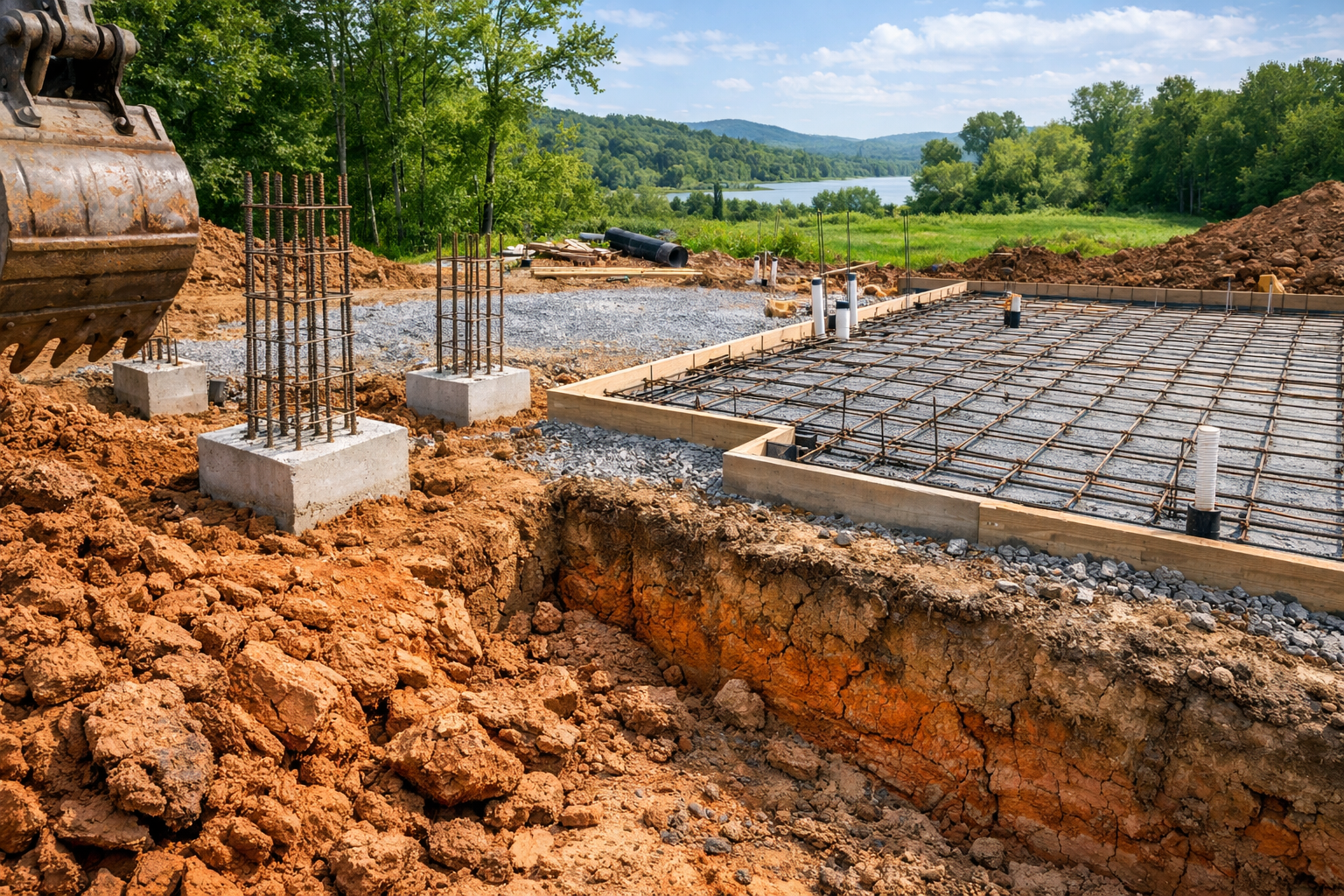
Solid Ground: Choosing the Right Foundation for Hudson’s Clay Soils
Hudson, Colorado, located in Weld County, is part of Northern Colorado’s rapidly growing Front Range region. While the town offers sweeping plains and a peaceful lifestyle, it presents a unique challenge for residential and commercial construction: expansive clay soils. These soils, rich in montmorillonite minerals, have a high capacity to absorb water and expand, then shrink dramatically during dry spells. This shrink-swell behavior creates unpredictable movements in the ground, often leading to structural issues in improperly designed foundations.
For property owners and developers in Hudson, CO, understanding and addressing these soil conditions is not optional. It is an essential part of long-term planning and investment protection. The expansive nature of local soils means that traditional foundation designs used in other parts of Colorado or the U.S. may not perform well without proper mitigation strategies. This is where specialized geotechnical engineering and foundation design become critical.
The Importance of a Geotechnical Soils Report
Before construction begins on any structure in Hudson, a detailed geotechnical soils report is typically required. Local building regulations in Weld County mandate this step to ensure structures are safe, resilient, and tailored to local ground conditions. These reports assess the type, depth, moisture content, and expansion potential of subsurface materials. In Hudson’s case, they usually reveal a mix of highly expansive clay layers interspersed with occasional sandy or silty deposits.
A structural engineer uses the findings from the soils report to determine which foundation systems are feasible and which require additional reinforcement or design modifications. For example, in areas with very high potential for swelling and shrinkage, the report may recommend drilled pier and grade beam systems or post-tension slab designs to reduce the risk of differential movement. Without these insights, buildings are far more likely to suffer from heaving, cracking, or uneven settling.
Common Foundation Types for Hudson’s Expansive Soils
One of the most common and effective foundation systems used in Hudson and throughout Northern Colorado is the drilled pier and grade beam foundation. This method involves drilling deep shafts into stable soil or bedrock layers below the active zone (where expansion and shrinkage occur), then filling these shafts with reinforced concrete piers. A grade beam connects the tops of the piers and supports the structure, effectively isolating it from the upper layers of soil that expand and contract.
Another widely used system is the post-tension slab design. This foundation involves pouring a concrete slab reinforced with steel cables that are tensioned after the concrete sets. The resulting compression helps the slab resist cracking and movement caused by soil changes. This technique is particularly useful in moderately expansive soils and is often more cost-effective than drilled piers for smaller homes or light commercial structures.
Selecting between these options depends on a range of factors including the severity of soil expansion, the weight and layout of the building, and budgetary constraints. An experienced structural engineer in Hudson, CO will take all of these variables into account, along with the project’s specific location, since soil conditions can vary even within a single neighborhood.
Engineering for Code Compliance and Longevity
Construction in Hudson, CO is regulated by both state and local building codes that reflect the region’s unique geological risks. Weld County building regulations, for example, require all new foundation systems to address expansive soil concerns explicitly. Builders must submit detailed plans showing how they will mitigate the risks identified in the geotechnical report, and these plans must be signed off by a licensed structural engineer.
Preventing foundation heaving is not just about code compliance; it is also about ensuring the long-term performance of a structure. Heaving can cause floors to slope, doors and windows to stick or jam, and walls to crack. Over time, this leads to costly repairs and can significantly diminish property value. Thoughtful foundation design, grounded in accurate soil analysis and executed by skilled professionals, is the best defense against these issues.
Another crucial consideration is drainage. Even the best-designed foundation will struggle if water is allowed to accumulate near the structure. Grading, guttering, and drainage systems should all be part of the initial planning to redirect water away from the building, reducing the soil’s moisture fluctuations and minimizing movement.
The Role of Structural Engineers in Hudson, CO
The role of a structural engineer in Hudson goes far beyond producing blueprints. These professionals provide the analytical bridge between a geotechnical report and a safe, efficient foundation design. In regions like Weld County, where expansive soils are a major concern, their input is essential to prevent long-term problems.
Engineers collaborate with architects, builders, and geotechnical firms to design foundations tailored to each site’s specific needs. They assess structural loads, evaluate potential movement, and apply design principles that have been proven effective in similar soil environments across Northern Colorado. In some cases, they may also oversee construction to ensure that all specifications are followed precisely.
Choosing a structural engineer with local experience is particularly important. Someone familiar with the soil behavior in Hudson and surrounding communities will be better equipped to make informed decisions about foundation options, drainage strategies, and reinforcement requirements. Their insight can make the difference between a home that remains structurally sound for decades and one that faces chronic issues within just a few years.
Conclusion
Building in Hudson, CO presents both opportunities and challenges. The scenic landscapes and growing communities are attractive for families and developers alike, but the region’s expansive clay soils demand careful planning and engineering expertise. By investing in a thorough soils report, selecting the right foundation system, and working with a qualified structural engineer, builders can protect their investments and create structures that endure.
Whether you are considering a drilled pier and grade beam system or exploring a post-tension slab design, the goal is the same: preventing foundation heaving and ensuring long-term stability. Meeting local building regulations and soils report requirements is just the beginning. True success lies in anticipating future issues and engineering solutions that stand the test of time. In Hudson and throughout Northern Colorado, that begins with a solid foundation grounded in science, experience, and smart design.
Need Engineers and Designers in Hudson, CO?
Since 2006, High Plains Engineering & Consulting, LLC has been a civil and structural engineering company in Fort Lupton and the surrounding areas. We provide sensible solutions to geotechnical, structural, environmental, and civil engineering challenges. Our office provides practical expertise backed by diverse design resources to get the job done cost-effectively and efficiently with sustainability in mind. We offer various services for commercial, residential, and agricultural properties like soil testing, percolation testing, and foundation and septic design for new construction. Once that is taken care of we also offer services for floor framing, garage plans, house plans, site plans, and inspection services. Call us today for an appointment!
Categorised in: Geotechnical Engineering