
 HPEC is an active member of CAGE
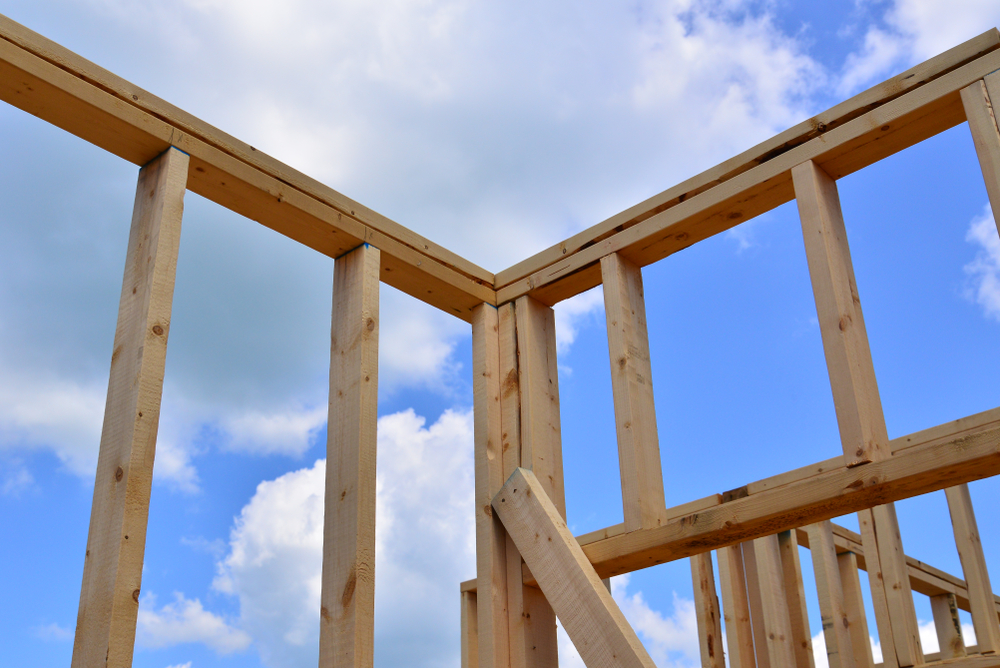
Structural Design Trade-Off: Comparing the R-Value and Load Capacity of 2×4 vs. 2×6 Walls
When it comes to residential and light commercial building, one of the most significant structural decisions lies in the choice between 2×4 vs 2×6 wall construction. This choice affects not only the structural integrity of the building but also the thermal efficiency, interior space, and overall budget. Builders, architects, and homeowners must balance various design priorities, such as wall framing, energy efficiency, and material costs, when selecting the right wall assembly.
Wall studs, typically made from dimensional lumber, are the backbone of any framed structure. The dimensions of these studs influence several crucial aspects of performance, especially when comparing R-value and structural load-bearing capacity. A 2×4 wall, with nominal dimensions of 1.5″ by 3.5″, has long been a standard in home construction. However, as energy codes have tightened and expectations for home comfort and efficiency have risen, 2×6 framing has gained popularity.
This article explores the structural design trade-offs between these two wall framing options, examining the differences in insulation capacity, structural load performance, cost implications, and long-term thermal benefits.
R-Value Comparison: Thermal Performance in Focus
One of the most important distinctions between 2×4 and 2×6 wall construction lies in their thermal performance. The R-value is a measure of thermal resistance, indicating how well a building material slows the flow of heat. The higher the R-value, the better the insulation performance, which directly impacts energy efficiency and indoor comfort.
A 2×4 wall cavity typically provides space for R-13 to R-15 fiberglass batt insulation. By contrast, a 2×6 wall cavity allows for R-19 to R-21 batt insulation. This additional insulation translates into significantly better resistance to heat loss or gain, particularly in climates with extreme seasonal temperatures. Additionally, the thicker cavity of a 2×6 wall offers more room for alternative insulation materials, such as blown-in cellulose or spray foam, which can further enhance the thermal envelope of the building.
Another aspect of thermal performance is thermal bridging. While 2×6 walls have more wood per linear foot than 2×4 walls, which can reduce overall R-value slightly due to wood’s higher conductivity compared to insulation, the higher insulation value in the cavity generally offsets this effect. The result is a wall assembly that offers better thermal efficiency overall.
From a long-term energy savings perspective, the increased R-value in a 2×6 wall can contribute to lower heating and cooling costs, making it a more attractive option for homeowners prioritizing sustainability and energy efficiency.
Structural Load Bearing and the Capacity of 2×6 Framing
Beyond insulation, structural performance is another critical factor in choosing between 2×4 and 2×6 framing. The capacity of 2×6 lumber to support vertical and lateral loads surpasses that of its smaller 2×4 counterpart. This increased capacity makes 2×6 framing a preferred option in areas subject to high wind loads, heavy snow accumulation, or seismic activity.
A 2×6 stud has a greater moment of inertia and cross-sectional area, which translates to superior resistance to bending, buckling, and deflection under load. This enhanced structural load bearing capacity allows for greater spacing between studs, often 24 inches on center instead of the 16 inches typical in 2×4 framing, without sacrificing stability or strength. In turn, this can reduce the number of studs required, potentially offsetting some of the additional material cost.
For taller wall assemblies, such as in multi-story buildings or homes with vaulted ceilings, the strength advantage of 2×6 walls becomes even more critical. In such cases, code compliance may actually require the use of larger studs to meet load requirements. This makes 2×6 construction not just a matter of preference, but of necessity.
Furthermore, 2×6 walls can accommodate larger and more efficient windows due to their greater structural strength. This opens the door to improved natural lighting and passive solar heating, enhancing the home’s livability and energy performance.
Framing Cost Analysis: Initial Investment vs. Long-Term Value
Cost is often the determining factor in the decision between 2×4 vs 2×6 wall construction. On the surface, 2×4 walls appear more budget-friendly due to the lower cost of materials. Lumber for 2×4 walls is generally cheaper, and the smaller size means reduced costs for related components such as insulation, fasteners, and sheathing.
However, the picture becomes more nuanced when considering framing cost analysis over the full lifecycle of the home. The ability to space 2×6 studs farther apart can reduce the total number of studs needed, partially offsetting the higher cost per stud. In addition, the superior thermal performance of 2×6 walls often results in energy savings that accumulate over time, delivering financial benefits that may exceed the initial framing cost differential.
Labor costs can vary depending on the contractor’s familiarity with the framing system. In many regions, 2×6 framing has become common enough that labor costs do not differ significantly from 2×4 framing. That said, building with 2x6s may require slightly more effort in handling, cutting, and installation due to the increased weight and volume.
Other factors that affect cost include window and door installation. These elements may need wider jambs and deeper framing in a 2×6 wall, which could require custom sizing or additional trim materials. Similarly, plumbing and electrical runs may benefit from the extra depth of 2×6 walls, offering more room for pipes and wiring, which can reduce the need for notching or drilling and preserve structural integrity.
Thermal Performance in Wall Assembly Beyond R-Value
While R-value is the headline metric in thermal performance, it is far from the only consideration in evaluating wall assembly options. Air sealing, moisture control, and continuous insulation also play vital roles in the energy efficiency of a wall system.
2×6 construction offers a natural advantage when it comes to integrating higher-performance wall assemblies. With more cavity space, builders can include thicker insulation and still maintain or improve wall depth for vapor barriers, air barriers, and structural sheathing. The deeper cavity also provides more flexibility for builders to add continuous exterior insulation, which can dramatically improve whole-wall R-value and eliminate thermal bridging at studs.
In addition, the depth of a 2×6 wall allows for better placement of mechanical systems within the wall cavity. This can enhance airtightness by reducing the number of penetrations through the building envelope. Coupled with modern air-sealing techniques and advanced insulation materials, 2×6 wall framing enables construction of high-performance buildings that meet or exceed energy codes such as IECC or standards like Passive House.
As building codes continue to push for more energy-efficient construction, the adaptability of 2×6 walls becomes a major advantage. They are better suited to meet future requirements, making them a future-proof choice for builders and developers concerned with long-term compliance and resale value.
Space Efficiency and Interior Considerations
One often-overlooked factor in the 2×4 vs 2×6 wall construction debate is the impact on interior living space. Because 2×6 walls are deeper, they occupy more floor area. In smaller homes or in developments where square footage is at a premium, the cumulative loss of interior space from thicker exterior walls may be a concern.
For example, increasing wall thickness from 4.5 inches (2×4 with drywall) to 6.5 inches (2×6 with drywall) across a home’s entire perimeter can reduce usable interior space by several square feet. While this might seem negligible, in compact designs or urban settings, every inch matters. This consideration often steers builders of small homes, cabins, and tiny houses toward 2×4 framing, where conserving interior dimensions is a top priority.
On the other hand, the deeper wall cavities of 2×6 construction can provide aesthetic and functional opportunities. Window sills are deeper, offering shelf space and architectural interest. Wall niches and built-ins become more feasible, and the added wall thickness can improve sound insulation and room comfort.
For homeowners focused on maximizing both structural integrity and energy performance, the trade-off in square footage is frequently outweighed by the long-term benefits of 2×6 framing.
Conclusion
Choosing between 2×4 and 2×6 wall framing involves careful consideration of multiple performance attributes, including thermal efficiency, structural strength, material and labor costs, and space utilization. While 2×4 framing remains a practical and economical choice for many residential projects, especially in milder climates or where budget is the primary concern, 2×6 wall construction offers superior insulation capabilities and structural load-bearing capacity.
In climates with extreme temperatures or in projects aiming for high energy performance, the R-value comparison clearly favors 2×6 construction. Additionally, the structural load-bearing capacity of 2×6 walls supports taller designs and increased architectural flexibility. Though the upfront investment may be higher, a framing cost analysis reveals that the long-term value of improved energy efficiency and future code compliance often justifies the expense.
Ultimately, the right choice depends on the specific goals of the project. Whether prioritizing thermal performance in wall assembly or structural integrity, understanding the trade-offs in wall framing empowers builders and homeowners to make informed, cost-effective decisions.
Need Engineers and Designers in Hudson, CO?
Since 2006, High Plains Engineering & Consulting, LLC has been a civil and structural engineering company in Fort Lupton and the surrounding areas. We provide sensible solutions to geotechnical, structural, environmental, and civil engineering challenges. Our office provides practical expertise backed by diverse design resources to get the job done cost-effectively and efficiently with sustainability in mind. We offer various services for commercial, residential, and agricultural properties like soil testing, percolation testing, and foundation and septic design for new construction. Once that is taken care of we also offer services for floor framing, garage plans, house plans, site plans, and inspection services. Call us today for an appointment!
Categorised in: Structural Engineer